
Why a Stepped-Rate ARM Isn’t the Rate You’ll Qualify For in Utah
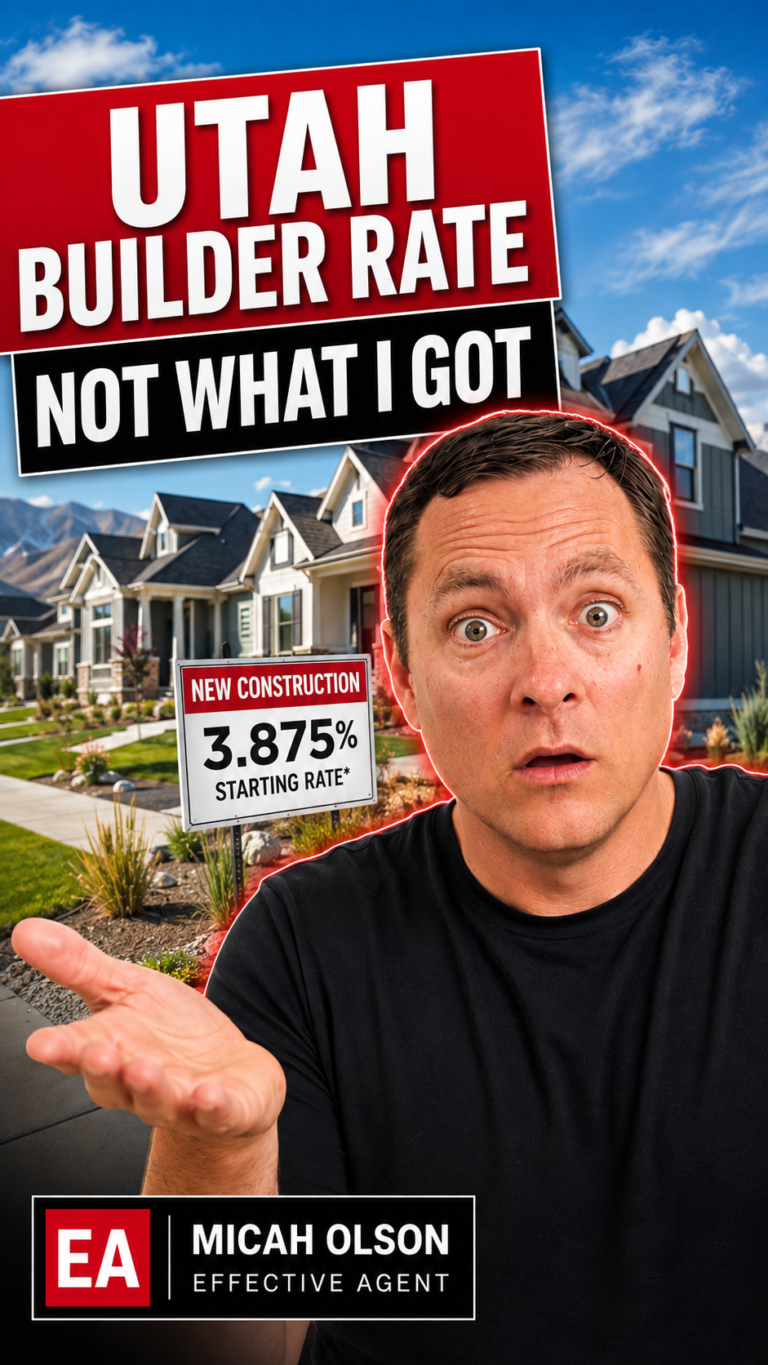
Quick Answer: No – if a Utah builder is advertising a stepped-rate 7/6 ARM with a low first-year number like 2.99%, that is not the rate you will qualify at. Utah lenders underwrite Ability-to-Repay against the highest rate scheduled anywhere in the loan’s first five years, and on a stepped ARM that higher rate usually shows up by year two or three – not year one.
The rate on the flyer and the rate on your qualification worksheet can be two different numbers on the exact same loan.
Why Doesn’t a Stepped-Rate ARM Qualify You at the Advertised Rate in Utah?
A stepped-rate 7/6 ARM doesn’t hold one interest rate for its full seven-year fixed period. It steps up on a schedule – a low rate in year one, a higher rate in year two, and a higher rate still for years three through seven, all before the loan is even eligible for its first real adjustment at month 84.
Utah lenders qualify a buyer using Ability-to-Repay rules, which require underwriting at the highest rate the loan can reach within its first five years. On a flat-rate 7/6 ARM – one number for the whole seven years – that highest rate is just the starting rate, since nothing changes before month 84. A stepped ARM is different: the rate itself moves inside that five-year window, so the highest step reached by year five is the number your income has to support, not the number in year one.
That’s the gap that catches buyers. The first-year rate is real. It’s just not the rate anyone’s debt-to-income ratio gets measured against.
How a Stepped-Rate 7/6 ARM Actually Works
Picture a typical structure: 2.99% in year one, 3.99% in year two, then 4.99% for years three through seven. The loan doesn’t adjust based on market rates during that stretch – it’s a scheduled step-up the builder and lender agreed to in advance, usually funded by a buydown fee baked into the deal. The 7/6 label just means the loan can’t adjust again until month 84, and then it adjusts every six months after that.
The appeal is obvious – a 2.99% payment in year one is a real, meaningful monthly savings. The problem is that it’s not the number Utah lenders use to decide whether you qualify for the loan in the first place.
Why the Highest Step Rate Is the One That Counts
Ability-to-Repay underwriting exists to make sure a buyer can actually afford the loan once the easy part wears off, not just at the moment it’s most attractive. For a stepped-rate ARM, that means the lender runs your debt-to-income ratio at whichever step is highest within the first five years – in the example above, that’s the 4.99% reached in year three, even though years one and two are lower.
This is genuinely different from a flat-rate 7/6 ARM, which qualifies at its single starting rate because that rate never moves before month 84. Micah has confirmed this distinction on his own 2026 loan, which uses a flat rate for the full seven years – the underwriting was straightforward because there was only one number the whole time. A stepped ARM doesn’t get that same treatment, because the rate schedule itself is the thing changing inside the window the lender is required to stress-test against.
A Real Example From a Utah Builder Community
Worth knowing: this kind of stepped-rate structure isn’t hypothetical – Pulte Homes has run one recently on a featured home at Mountain Vista in Eagle Mountain, Utah: 2.99% in year one, 3.99% in year two, and 4.99% for years three through seven on a 7/6 ARM. The buyer still had to qualify at 4.99%, not 2.99%, even though the first-year payment reflected the lower number. Builder promotions like this change month to month and community to community, so treat this as an example of the mechanic, not a current offer – confirm today’s actual terms with the builder or your agent before writing anything.
What Happens When a Buyer Doesn’t Qualify at the Real Rate
Micah sees the same pattern repeat with stepped-rate ARM buyers in Utah: they get excited about the first-year number, sign the contract, and then find out from the builder’s own lender that they don’t actually qualify – because underwriting is run at the highest step, not the teaser. The earnest deposit typically comes back, so the immediate financial hit is usually small.
The real cost is time. A buyer who spent weeks under contract on a home they were never going to qualify for has very likely passed on other Utah homes they could have bought during that same window. That’s opportunity lost, not cash lost – and it’s the harder kind to get back.
How to Check the Real Qualifying Rate Before You Fall for the Ad
Before writing an offer on any stepped-rate ARM in Utah, ask the lender directly to run your debt-to-income ratio at the highest rate in the schedule – not the first-year rate, and not an average. If a builder’s preferred lender won’t give you that number in writing before you sign, that’s the question to keep asking until you get it. It takes one phone call to know whether the deal is real for your income or just real for someone else’s.
The Short Version
- A stepped-rate 7/6 ARM’s rate increases on a set schedule inside its first five years – it isn’t one flat rate for all seven years.
- Utah lenders qualify buyers using Ability-to-Repay rules, underwritten at the highest rate reached within that five-year window – usually by year two or three on a stepped ARM.
- A flat-rate 7/6 ARM is different – it qualifies at its single starting rate because nothing changes before month 84.
- A recent example: Pulte’s Mountain Vista community in Eagle Mountain offered 2.99% year one, 3.99% year two, 4.99% years three through seven – buyers qualified at 4.99%.
- Buyers who don’t qualify at the real rate usually get their deposit back, but lose time and other homes they could have bought instead.
- Ask your lender to run your DTI at the highest scheduled rate before you write an offer, not after.
Frequently Asked Questions
What is a stepped-rate 7/6 ARM?
It’s a 7/6 adjustable-rate mortgage where the interest rate increases on a set schedule during its first several years – for example, 2.99% in year one, stepping up to 3.99% and then 4.99% – before the loan becomes eligible for its first market-based adjustment at month 84.
Do all 7/6 ARMs qualify at a higher rate than advertised?
No. A flat-rate 7/6 ARM – one interest rate for the entire seven-year fixed period – qualifies at that single starting rate, since nothing changes before month 84. It’s specifically the stepped-rate version, where the rate itself rises within the first five years, that requires qualifying at the highest step instead of the first-year number.
What happens if I’m under contract and find out I don’t qualify at the real rate?
In the pattern Micah has seen with Utah buyers, the earnest money deposit typically comes back, so there’s usually no direct financial loss. The real cost is the time spent under contract on a home you couldn’t actually close on – and the other Utah homes you may have passed on in the meantime.
Is a stepped-rate ARM ever still a good deal?
It can be, if you’d qualify comfortably at the highest scheduled rate anyway and the lower early payments free up cash flow for something specific – just don’t choose it because of the year-one number alone. The deal has to work at the real qualifying rate, not just the advertised one.
How do I find out the real rate I’ll qualify at before making an offer?
Ask the builder’s lender – or your own lender – to run your debt-to-income ratio at the highest rate in the step schedule, in writing, before you sign anything. If they can’t or won’t give you that number up front, treat that as a red flag rather than a formality.
Want the Full Breakdown on Builder Incentives?
I’ve spent 29+ years in Utah real estate watching buyers fall for the first-year number on a builder incentive before anyone ran the real math. Comment INCENTIVES, or send me a message with the word INCENTIVES, and I’ll send you the Builder Incentives Guide.
Related Reading
- Utah Builder Incentives: How They Work and How to Compare Them
- Do I Have to Use the Builder’s Preferred Lender in Utah?
- 2-1 Buydown vs. Permanent Buydown: Which Is Better in Utah?
- Lender Rate vs. Builder Rate: How Much House Can You Actually Afford in Utah?
- 7/6 ARM vs. 30-Year Fixed in Utah New Construction: Which Saves More?
- Why a Utah Builder’s Advertised Rate Isn’t a Guarantee