
7/6 ARM vs. 30-Year Fixed in Utah New Construction: Which Saves More?
Quick Answer: On a recent Saratoga Springs, Utah new-construction offer, a builder’s 7/6 ARM with a 2-1 temporary buydown priced out to roughly $76,000 less paid over the life of the loan than the same builder’s straight 30-year fixed option, on a $580,000 loan. The gap isn’t just the two years of reduced buydown payments – the ARM’s own note rate priced about half a point below the fixed rate for the entire loan, which is what actually drives most of the savings.
Most buyers assume the ARM only wins in years one and two. The math says otherwise.
Does a 7/6 ARM With a 2-1 Buydown Really Beat a 30-Year Fixed in Utah?
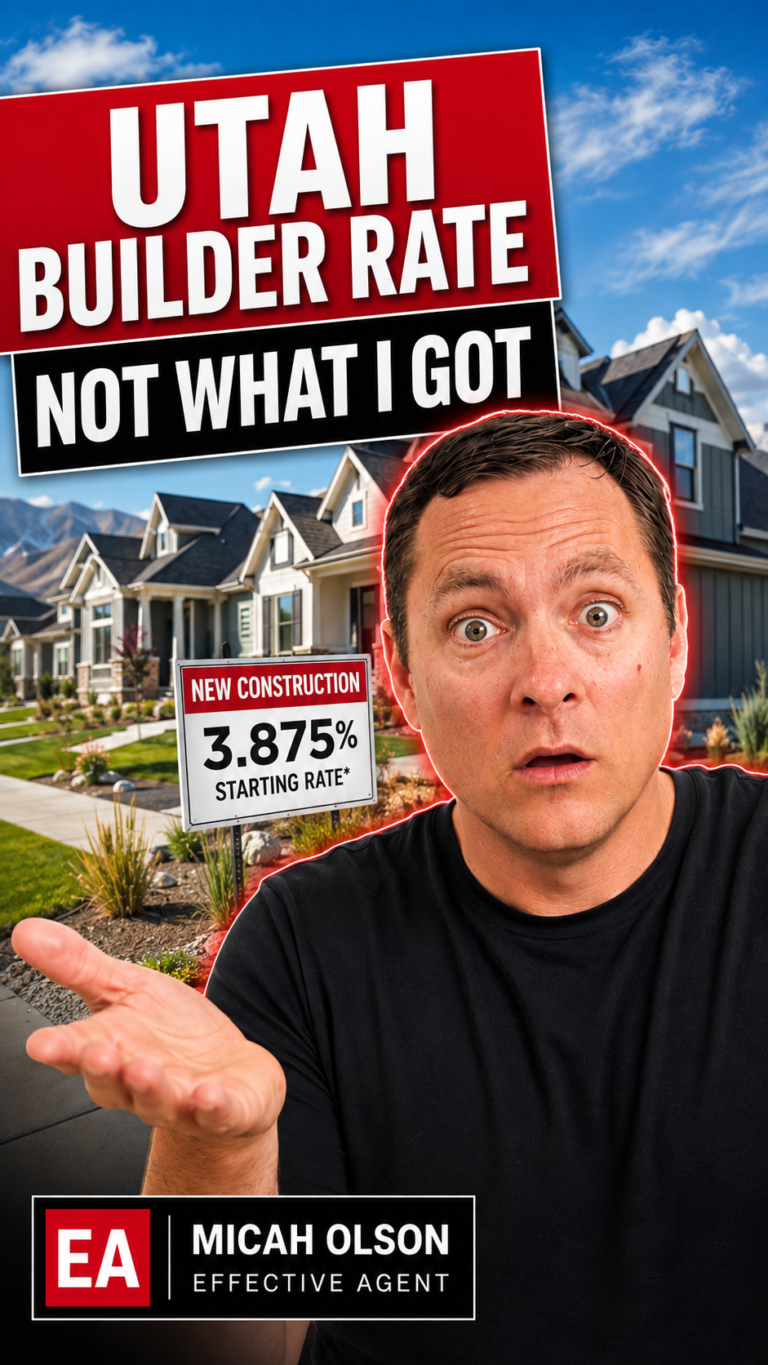
On the specific Saratoga Springs, Utah offer this is based on, yes – and by more than most buyers expect. The builder’s preferred lender offered two paths on the same $580,000 loan: a 7/6 ARM at a 4.99% note rate with a 2-1 temporary buydown (2.99% in year one, 3.99% in year two), or a straight 30-year fixed at 5.49%.
Half a point doesn’t sound dramatic on paper. Run across 30 years of amortization, plus two years of reduced payments up front, it adds up to real money – not a rounding error.
The number that matters most here isn’t the flashy 2.99% first-year rate. It’s the 4.99% note rate the ARM settles into after the buydown expires – because that’s the rate carrying the loan for the next 26 years, not just two.
Where the Real Savings Actually Come From
Buyers fixate on the buydown’s first-year 2.99% because it’s the number on the flyer. But the bigger driver here is that the ARM’s underlying note rate – 4.99% – is a full half-point below the builder’s own 5.49% fixed option. On a $580,000 loan, that rate gap alone is worth roughly $64,000 in interest saved over 30 years, before the buydown years are even counted.
Add the two years of reduced payments from the 2-1 buydown – 2.99% in year one, 3.99% in year two, both below what the ARM would otherwise cost at 4.99% – and the combined savings land around $76,000 over the life of the loan. That’s the real number, not the headline first-year rate.
What Happens When the 7/6 ARM’s Rate Can Actually Adjust?
A 7/6 ARM doesn’t adjust at all until month 84 – seven years in – and then it can move every six months after that based on market conditions. Everything in this comparison assumes the 4.99% note rate holds through that point, which it will, since a 7/6 is fixed for its full seven years by definition. What happens after month 84 is the real unknown, and it’s not part of this math.
This is the bet built into any ARM: you’re not signing up for a rate that’s fixed forever, you’re signing up for a rate that’s fixed for seven years, with a real decision point at the end of it. Micah’s own approach on his ARM decisions is to treat that adjustment date as the point to refinance if the numbers make sense, not a risk to just ride out – bank the early savings, then reassess with real information instead of a forecast.
Why Does the Builder Offer a Lower Rate on the ARM at All?
Builders and their preferred lenders price ARMs lower than fixed-rate loans because the lender is only carrying the fixed-rate risk for seven years instead of thirty. That’s a real, structural reason the ARM prices lower – not a gimmick or a teaser rate with strings attached. The 2-1 buydown on top of that is a separate incentive layered onto an already lower-priced loan, which is why the combined effect is bigger than either piece alone.
Is This Comparison Specific to This One Community?
Worth knowing: this pricing came from a specific David Weekley Homes offer on Saratoga Springs, Utah new construction, through the builder’s preferred lender – it’s not a standing, universal rate. Builder promotions shift month to month and community to community, so treat the 4.99% / 2.99% / 3.99% / 5.49% numbers here as a real, recent example of the mechanic, not a current offer. Confirm today’s actual terms with the builder or your agent before assuming they still apply.
The Short Version
- On a recent Saratoga Springs, Utah offer: 7/6 ARM at 4.99% w/ 2-1 buydown (2.99% yr 1, 3.99% yr 2) vs. 5.49% 30-year fixed, same $580,000 loan.
- The ARM’s own note rate (4.99%) – not just the buydown – is what drives most of the savings versus the 5.49% fixed.
- Rate-gap savings alone: roughly $64,000 over 30 years. Add the buydown years and the total lands near $76,000.
- The 7/6 ARM is fixed for a full seven years (84 months) before it can adjust at all.
- What happens after month 84 isn’t part of this math – that’s the real decision point, not a forecast this comparison makes.
- Builder ARM/buydown pricing shifts month to month and community to community – confirm current terms before assuming they apply to a specific home.
Frequently Asked Questions
Does a 7/6 ARM with a 2-1 buydown really save more than a 30-year fixed in Utah?
On the Saratoga Springs, Utah example here, yes – roughly $76,000 over the life of a $580,000 loan, because the ARM’s own note rate priced half a point below the fixed rate on top of two years of reduced buydown payments. The exact savings depend on the specific rates offered, which change by builder and community.
What is a 7/6 ARM with a 2-1 buydown?
A 7/6 ARM holds one interest rate for its first seven years before it’s eligible to adjust, then can adjust every six months after that. A 2-1 buydown layered on top temporarily reduces the payment further in the first two years – 2 percentage points below the note rate in year one, 1 point below in year two – before settling into the ARM’s actual note rate for the rest of the seven-year term.
What happens after the 7/6 ARM’s rate can adjust at year seven?
That’s genuinely unknown at the time the loan is originated – it depends on where rates are in seven years. The loan doesn’t adjust at all before month 84, so buyers have the full fixed period to plan for it, and many, including Micah on his own ARM decisions, treat that date as a refinance decision point rather than a risk to simply absorb.
Is the ARM’s note rate always lower than the fixed rate on Utah new construction?
Not automatically, but it’s common, because the lender is only pricing seven years of fixed-rate risk on the ARM instead of thirty. Always compare the specific numbers a builder’s preferred lender is quoting on both options – don’t assume the pattern holds without checking.
Is a 7/6 ARM riskier than a 30-year fixed for a Utah buyer?
It carries a different kind of risk, not automatically a bigger one – the loan is fixed for a full seven years, so the uncertainty only arrives at month 84, not immediately. Whether that tradeoff is worth it depends on the buyer’s plans for those seven years and comfort with a future refinance decision.
Want the Real Numbers on Your Own Situation?
I’ve spent 29+ years in Utah real estate running this exact comparison for buyers who assumed the fixed rate was automatically the safer, cheaper choice. Comment PAYMENT, or send me a message with the word PAYMENT, and I’ll send you my free Utah new construction payment comparison worksheet.